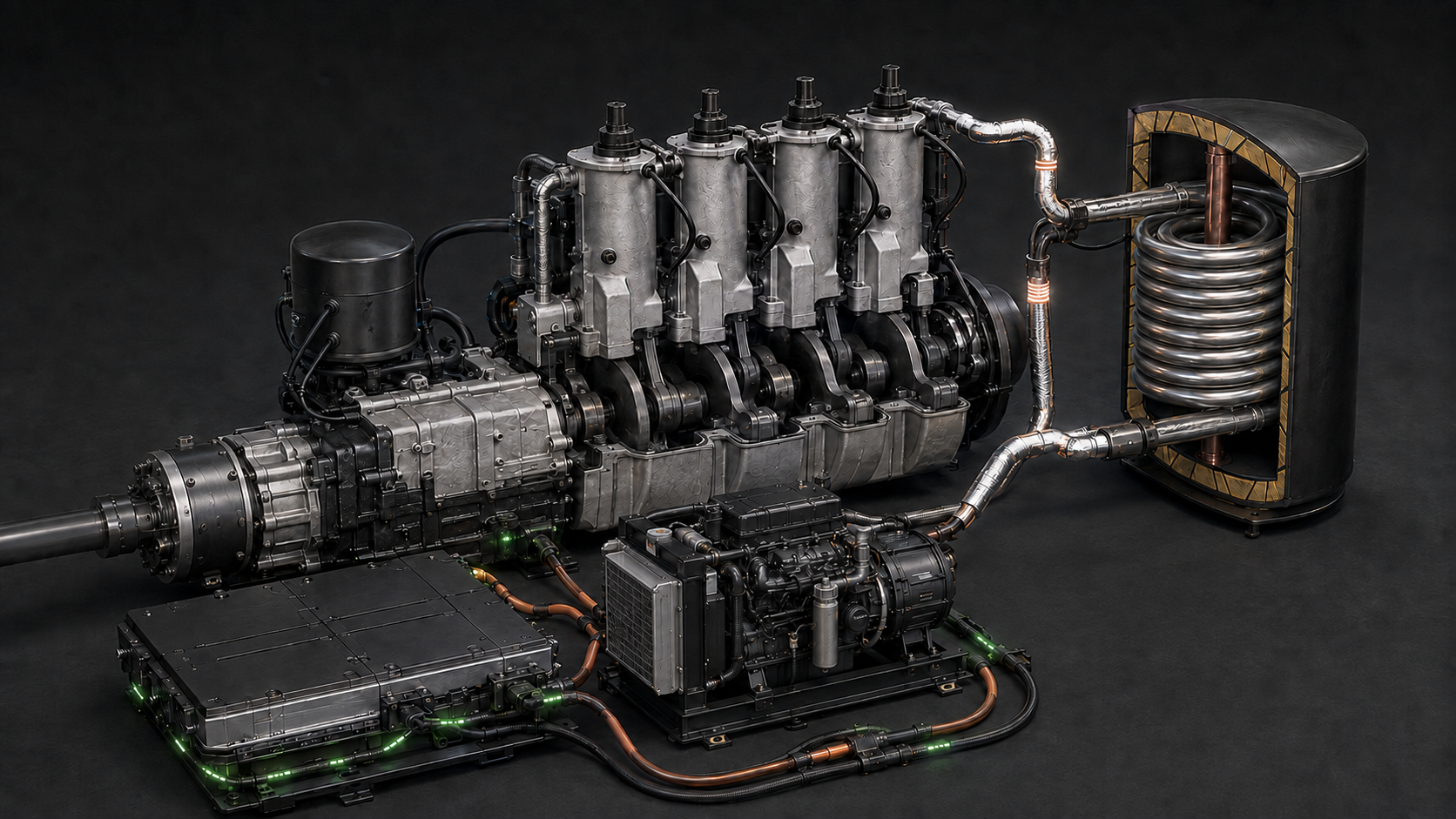
BrixRae Limited DOUBLE-COMPOUND STEAM–ELECTRIC POWERTRAIN
Steam power for the long haul. A ten-hour route and complete 24-hour energy cycle showing the double-compound steam engine delivering sustained propulsion, patented valves matching power to demand, and recovery systems reducing electrical input. BrixRae LimitedGUIDED ENGINEERING TOUR Start the guided tour for the complete BrixRae energy-cycle explanation.
Start guided tour Mute Replay section
RouteRolling mixed freight Mountain mixed freight Primary propulsion Steam engine
Patented admission range 8–40%
Thermal recovery offset 58%
Recurring electric demand 1,000 kWh
Net recovered electricity 600 kWh
01
Live powertrain model SYSTEM HOLD Realistic model Engineering schematic
560 kWh battery100% SOC
Kubota diesel APU25 kW · READY
Double-compound steam engine16% patented variable admission · PRIMARY PROPULSION
Induction steam generator82 bar · 537°C
Permanent magnetic motor generator180 kW torque support
Steam propulsion · torque support · 16% admission · 8 mph
AUXILIARY POWER 25 kW APU 10.0 H DRIVING · 6.0 H PARKED
ENERGY BUFFER 100% SOC
SUPPLYING INDUCTION BUS
STEAM GENERATOR 82 bar · 537°C ••••
INDUCTION PULSE ACTIVE
PRIMARY PROPULSION · DOUBLE COMPOUND HP + LP STEAM ENGINE ⚙
16% PATENTED VARIABLE ADMISSION SIMPLIFIED GEARBOX
TORQUE SUPPORT + RECOVERY MOTOR GENERATOR ✦
180 kW SUPPORTING STEAM PROPULSION Animation indicates state—not physical RPM.
02
Live cumulative energy meters 0.00 OF 10.00 HOURS Total recurring demand 0.0 kWh
ISG + permanent magnetic motor generator + every auxiliary1,000 kWh at 10h
Gross permanent magnetic motor generator recovery 0.0 kWh
braking, descent and otherwise-wasted energy750 kWh at 10h
Permanent magnetic motor generator traction consumption 0.0 kWh
electric propulsion and torque assist150 kWh at 10h
Net permanent magnetic motor generator contribution 0.0 kWh
gross recovery minus traction use600 kWh at 10h
APU generation 0.0 kWh
25 kW during the route250 kWh at 10h
Battery contribution 0.0 kWh
temporary net discharge150 kWh at 10h
Elapsed demand 0.0 kWh
− +
Net permanent magnetic motor generator contribution 0.0 kWh
03
Supporting electrical recovery COMPLEMENTS STEAM PROPULSION Gross regeneration captured 750 kWh
− Temporary torque support 150 kWh
= Net recovered contribution 600 kWh
04
Route and traction state Rolling mixed freight Elapsed 0.0 h
Speed 8 mph
Steam admission 16%
Permanent magnetic motor generator state Motoring
05
Target energy controller ROLLING MIXED FREIGHT CASE Gross steam-cycle basis2,700 kWh
Integrated first-stage offset · 58%1,566 kWh
Initial ISG electrical benchmark1,194 kWh
Final recurring demand gate1,000 kWh
Primary sustained propulsion Steam engine double-compound torque through the simplified gearbox
Patented demand control 16% admission independent piston stroke rises only with road demand
Thermal recovery offset 58% condenser, exhaust and feedwater heat reused
Net electrical recovery 600 kWh 750 recovered − 150 used for torque support
06
Energy support across the complete daily cycle FULL-TO-FULL BATTERY Total recurring electrical demand1,000 kWh
Gross motor-generator recovery750 kWh
Temporary torque support150 kWh
Net recovered electricity600 kWh
10-hour steam-powered route Double-compound engine provides sustained propulsion · recovery reduces electrical input
6.0 hours Parked APU restores 150 kWh
8.0 hours 100% SOC · 200 kWh capacity held in reserve
16.0 hr actual APU runtime400 kWh actual APU generation24.0 gal projected APU fuel100% final battery SOC
PROPULSION HIERARCHY
The steam engine does the sustained work. The four-cylinder double-compound steam engine is the truck's primary propulsion source. Patented valves regulate each cylinder's piston stroke, holding admission near 8–10% at highway demand and moving toward 40% only for sustained climbs. The permanent magnetic motor generator provides short-duration torque support and recovers braking energy. Condenser, exhaust and feedwater heat recovery reduce the electrical input required to produce each new steam pulse.
Rolling mixed freight target case · steam-primary propulsion · 58% thermal offset · 200 kWh reserve · 100% final SOC  BrixRae Limited